Complete Report
Topline Questionnaire
The ongoing recession has had different impacts on different age groups in America. Adults 65 and older -- most of whom have already retired and downsized their lifestyles -- have escaped its full fury. Adults in late middle age (50 to 64) have seen their nest eggs shrink the most and their anxieties about retirement swell the most. Younger adults (ages 18-49) have taken the worst lumps in the job market but remain relatively upbeat about their financial future.
These are the main findings of telephone survey of a nationally representative sample of 2,969 adults conducted by the Pew Research Center's Social & Demographic Trends project from Feb. 23 to March 23, 2009.1
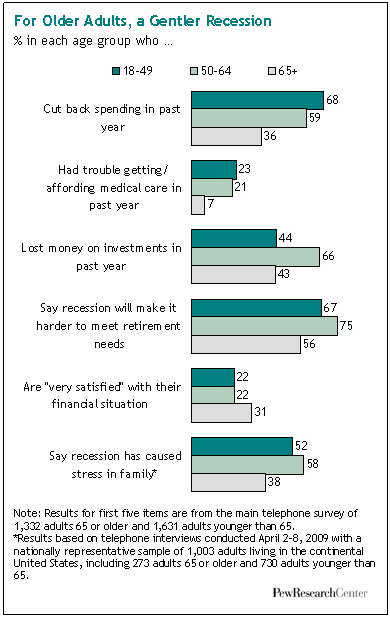
The most compelling story to emerge from the survey is that older adults are living through what for them has been a kinder, gentler recession -- relatively speaking. They are less likely than younger and middle-aged adults to say that in the past year they have cut back on spending; suffered losses in their retirement accounts; or experienced trouble paying for housing or medical care. They're more likely to report being very satisfied with their personal finances. And they're less likely to say the recession has been a source of stress in their family.
Moreover, despite the recession, three-quarters say they expect to be able to leave an inheritance for their children -- even though more than half of all older adults say the recession has reduced the amount of money or property they expect to bequeath.
By contrast, adults ages 50-64 are living through what feels to them like much harder times. Three-quarters of this so-called Threshold Generation say that the nation's current economic problems will make it more difficult for them to afford retirement. Two-thirds of younger adults and 56% of older adults share the same concern.
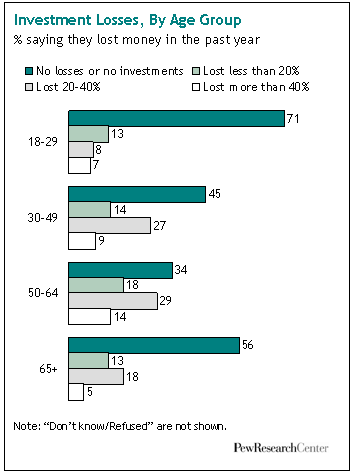
One reason that late-middle-aged adults feel so vulnerable is that their nest eggs have taken the brunt of Wall Street's meltdown. Two-thirds of adults ages 50-64 say they lost money in the past year in mutual funds, individual stocks or 401(k)-type retirement accounts. Of those who report such losses, two-in-ten say they lost more than 40% of their investments' value and nearly four-in-ten say they lost 20% to 40%. By comparison, far fewer older adults or younger adults report losing money in stocks and retirement accounts in the past year.
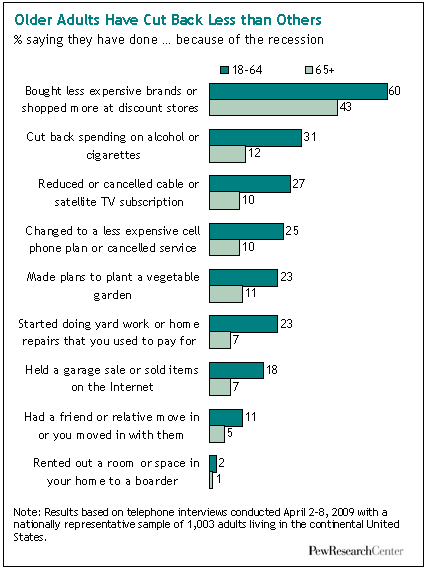
When it comes to specific changes in behavior triggered by the recession, there are also notable differences by age. Fully 60% of all younger and middle-aged adults say they are doing more shopping at discount stores or avoiding more expensive brands, compared with just 43% of adults 65 or older. Those under age 65 are more than twice as likely as older adults to have cut down on spending on alcohol or cigarettes (31% vs. 12%) or reduced spending on cable service (27% vs. 10%). And nearly a quarter of younger adults say they plan to plant a "recession garden" to cut their food bills, about double the proportion of older adults who anticipate taking this step (23% vs. 11%).
One caveat about these reported behavioral changes: Some individuals may have changed their behaviors prior to the recession (for example, shopping in discount stores). Others may never have engaged in the behavior in the first place (for example, owning a cell phone). Taken together, these factors probably account for some of the disparities by age found in this battery of questions.
Race and ethnicity play out differently among different age groups. Blacks and Hispanics ages 65 and older are significantly more likely than similarly aged whites to say that in the past year they have cut back on household spending or have had problems obtaining or paying for medical care.
Yet these racial and ethnic disparities largely vanish among younger generations of blacks, whites and Hispanics on many key questions. For example, 34% of all older whites but 42% of older blacks report they cut back on household spending the past year because money was tight -- an eight-point gap. For Hispanics, the gap is larger: 11 points. But among those younger than 65, these differences disappear: about two-thirds of all whites (65%), blacks (65%) and Hispanics (64%) say they have trimmed spending in the past year. For younger adults, these data suggest that the recession may be colorblind.
Not surprisingly, income plays a major role in how hard people have been hit during the recession -- and this holds true across all age groups. Three-quarters of all adults with family incomes below $30,000 say they have cut back household spending in the past year, compared with 58% of those earning $75,000 or more. The median annual income of older adults is smaller than that of other age groups, but the pattern is the same: Older adults whose family income is less than $20,000 a year are more than twice as likely as older adults whose income is $50,000 or more to have cut spending (57% vs. 22%).
The survey also finds a sharp inheritance expectations gap between older adults and their adult children. About three-quarters of all adults 65 or older say they plan to leave an inheritance to children or family members. By contrast, less than half (43%) of all adult children with older parents say they expect to receive an inheritance.
The remainder of the report is organized as follows:
Section I: Riding Out the Storm
Section II: The Recession and Older Minorities
Section III: The Threshold Generation: Biggest Investment Losses, Biggest Fears
Section IV: Retirement in a Time of Recession
Section V: Recession's Impact on Inheritance and Families

The perfect economic storm that has swept across the economy in the past year has largely bypassed older Americans.
Slightly more than a third of all adults 65 or older report they have had to cut back on household spending in the past year, compared with nearly two-thirds of other adults. Only 7% of older adults report they have had trouble getting or paying for medical care. In contrast, adults younger than 30 are nearly four times as likely to report they have had trouble securing affordable medical care, while those 30 to 64 are about three times as likely to have had difficulties in this area.
Older Americans also fare relatively better on another measure of financial strain. Fewer than half (43%) of all older Americans report they have lost money in mutual funds, stocks or retirement funds such as 401(k) accounts in the past year, compared with 51% of other adults. Not only that, but older adults who had investment setbacks appear to have lost proportionately less money than other Americans; among those whose investments have shrunk in value, slightly more than half (54%) of those 65 or older lost 20% or more, compared with 64% of other investors.
Overall, three-quarters of adults 65 and older report they are satisfied with their personal financial situation, compared with roughly two-thirds of other Americans. And a third of older adults (33%) report they are "very satisfied" with their finances, compared with 22% of those younger than 65.
That is not to say that older adults are entirely recession-proof. More than a third say they have trimmed household spending in the past year. Nearly four-in-ten (38%) older adults say the recession has caused stress in their families. And a majority (56%) predicts that the recession probably will make it harder for them to take care of their financial needs in retirement.
Still, older adults are the least likely of any age group to say they will be adversely affected by the current economic downturn. Even adults under 30, who presumably still have decades to make up any recession-related financial reversals, are more likely than those 65 or older to say their ability to finance their retirement will be hurt by the recession (66% vs. 56%).
When the older age group is divided into those who are ages 65 to 74 and those who are 75 or older, the story remains largely the same: Even those in the oldest age group have fared significantly better in the past year than younger Americans. Moreover, there is little difference between the two older groups in terms of the proportions that have had to cut back on spending or had difficulty getting medical care. And seven-in-ten in each group are confident they have enough money to live out their lives.
Can a telephone survey accurately reflect the circumstances of all older Americans, some of whom are too mentally or physically infirm to participate in a poll? To address this concern, the Pew Research survey also interviewed a large sample of adults with at least one living parent 65 or older. A number of the questions were similar to those that were asked directly of adults 65 or older in the telephone survey. In theory, the data based on reports of adult children about their parents should include information on older parents who are physically or mentally unable to participate in a telephone survey. While this design cannot capture data on adults 65 or older who never had children, this sample can be used to complement or confirm basic findings of the telephone survey.
A total of 807 adult children with an older parent were interviewed. As expected, this sample did contain data from adult children whose parents are in failing health or living in nursing homes or other institutional settings.
While there are some differences, the findings based on telephone interviews with older Americans and those based on interviews with adult children tell the same generally positive story about the financial health of older Americans. Nearly nine-in-ten adult children say their older parent or parents have no problems paying their bills (87%), roughly similar to the 84% of Americans 65 or older who report that in the telephone survey. Also, nearly nine-in-ten (86%) adult children are confident their parents will have enough income and assets to last for the rest of their lives. That's significantly higher than the 73% of survey respondents 65 and older who express that sentiment.
Money MattersNot surprisingly, the survey found that adults of all ages with lower incomes have struggled the most in the past year.
Three-quarters of all adults with family incomes of less than $30,000 say they have had to cut back household spending, compared with 58% of those making $75,000 or more. Nearly four-in-ten higher-earning adults also report they have had trouble getting or paying for medical care -- a problem faced by only 6% of all Americans who are better off financially.
Lower-income adults also are less confident that they will have enough money in their retirement years. About six-in-ten respondents with family incomes less than $30,000 say they are certain they have the financial resources for their later years, compared with 86% of those earning $75,000 or more.
But relatively poor and relatively well-off Americans agree that the recession will make it harder for them to take care of their financial needs in retirement, a view shared by lopsided majorities of those earning less than $30,000 (69%) as well as those with incomes of $75,000 or more (65%).
Among older adults, different demographic groups have fared better financially than others in the past year. For example, more than four-in-ten older blacks and Hispanics but only about a third of whites 65 or older report they have trimmed household spending because money was tight.
Similarly, 15% of older Hispanics and 10% of older blacks say they had trouble getting or paying for medical care, compared with 5% of whites 65 and older. At the same time, nearly half of all older whites (49%) say the have lost money on investments, roughly three times the proportion of blacks (14%) and Hispanics (18%) -- a finding that no doubt reflects the considerable differences in ownership of stocks, bonds and other financial assets among different racial and ethnic groups, irrespective of age.
The race gap on some key questions is greater among older adults than it is among Americans younger than 65. For example, the big difference in the proportion of older blacks and whites who have cut household spending in the past year disappears among these younger adults. Virtually identical proportions of younger whites (65%), blacks (65%) and Hispanics (64%) say they have trimmed spending because money was tight.
A similar pattern emerges when respondents were asked if they are confident they have enough income and assets to take care of their financial needs in retirement: 71% of whites younger than 65 and 70% of blacks say they do. But among whites and blacks 65 or older, the gap swells to 16 points. The same pattern plays out between whites and Hispanics: The gap is 1 percentage point among younger Hispanics and younger whites but 13 points among Latinos and whites ages 65 or older.
Even when that younger age group is divided into two groups -- 18 to 34 and 35 to 64 -- the overall pattern remains: Big differences exist by race among older adults but there are no statistically significant differences by race in any of the younger groups.
These racial differences among older Americans are due, in part, to income disparities. In fact, nearly half of all older Hispanics (48%) and nearly as many older blacks (43%) have family incomes of less than $20,000 a year, compared with just 28% of whites. Not surprisingly, Americans who earn less have been harder hit by the recession than wealthier adults, and this pattern holds among older Americans as well. What is different is that older minorities are significantly more likely than younger minorities to fall into the lowest income group.
Overall, nearly six-in-ten adults 65 or older with family incomes of less than $20,000 say they have cut back spending in the past year, more than double the proportion of older adults with incomes of $50,000 or more (57% vs. 22%). Significantly, older minorities are even more likely than younger minorities to have family incomes that put them in the lowest-income group. For example, 43% of older blacks have family incomes of less than $20,000, compared with 27% of blacks younger than 65. Among older Hispanics, nearly half (48%) earn less than $20,000, compared with 30% of younger Hispanics. (In contrast, 28% of older whites and 14% of younger whites have similarly low incomes.)
Still, low-income older adults are better off on this measure than other lower-earning Americans; among those younger than 65, eight-in-ten report they have been forced to trim back household spending in the past year. That's fully 20 percentage points higher than the proportion of lower-income seniors.
Even with Medicare and Medicaid, older adults with incomes of less than $20,000 are three times as likely as those with incomes between $20,000 and $50,000 to report problems getting or paying for medical care (15% vs. 5%). An even smaller proportion (2%) of seniors with family income of $50,000 or more have similar problems with medical care.
However, older Americans with higher incomes regardless of race have not escaped all of the effects of the recession. Among those 65 or older who have retired, those with higher family incomes are more likely than those with lower incomes to have seen their retirement income decline in the past year (36% vs. 20%). In large part, this is because more higher-earning adults in general are the most likely to hold investments affected by the steep decline in the stock market.
Call them the Threshold Generation: Americans ages 50 to 64 who are at or near the peak of their earnings potential and net worth, and who are also at the brink of retirement, if they haven't already stopped working. They are the generation that has the most to lose in a recession marked by a stock market meltdown. And, true to form, according to this survey, they're the ones who have suffered the most.
Members of the Threshold Generation are the most likely to have lost money in stocks or retirement accounts -- and they have also suffered the biggest losses. They are the most likely to say they won't have enough to live on in retirement. And nearly half (46%) of 50 to 64 year olds who are not yet retired say that in the past year they've considered delaying their eventual retirement, a higher share than says the same within any other age group.
Two-thirds of the Threshold Generation say they have lost money in the past year in investment accounts, compared with slightly more than half of 30- to 49-year-olds and 43% of those 65 or older. Only about three-in-ten adults under the age of 30 experienced losses, in large part because proportionately fewer young people have invested in stocks, mutual funds or 401(k) programs.
Members of the Threshold Generation also are more likely to have suffered the biggest losses. Nearly one-in-seven (14%) say their investment or retirement holdings declined more than 40% in just the past year, compared with 5% of older adults, 7% of those under 30 and 9% of adults ages 30 and 49.
Most Americans, young or old, worry that the recession will make it harder to take care of their financial needs in retirement, and adults in the Threshold Generation -- those at or nearing retirement age -- worry about it the most. Among those ages 50 to 64, three-quarters say that the recession has made it harder for them to take care of their financial needs in retirement, compared with two-thirds of those under 50 and a modest majority of those 65 or older (56%).
Income matters surprisingly little in fueling the recession-driven financial worries of the Threshold Generation. Some 73% of those with family incomes under $30,000 as well as 78% of those with incomes of $100,000 or more say the recession will make it harder to take care of their financial needs once they retire. Similarly, there is little difference by gender or levels of education or by race, suggesting that these concerns are broadly felt by many of those nearing the end of their working lives.
But what about younger Americans, many of whom have just entered the workforce or are still looking for their first job? These data suggest that the recession-era experiences of adults younger than 30 have been mixed. People in this age group are the most likely to report having trouble getting or paying for medical care in the past year (27% vs. 20% for all adults). About two-thirds say they had to cut back on household spending, roughly similar to the proportion of middle-aged adults who have had to economize but larger than the share of older adults who have taken this step in the past year. But younger adults are among the most confident of any age group that they will have enough money in their retirement years.
Few other significant demographic differences emerge in the financial experiences of Americans during the recession era. Women are no more likely than men to say that they have had trouble getting or paying for medical care (21% vs. 19%). And two-thirds of both men and women predict that the nation's current economic problems will make it harder for them to take care of their financial needs in retirement. At the same time, women are slightly more likely than men to say they have trimmed household spending in the past year (63% vs. 57%), while men are somewhat more likely to say they have lost money on investments or retirement accounts (52% vs. 47%).
When asked to think about how they will finance their retirement, Americans of all ages are of two minds. Fully seven-in-ten say they are very (30%) or somewhat (41%) confident that they will have enough income and assets to last throughout their retirement years. At the same time, however, two-thirds of all adults (and 75% of everyone ages 50 to 64) say that the nation's current economic problems will make it harder for them to take care of their financial needs in retirement.
Perhaps not surprisingly, a person's confidence in his or her ability to afford retirement is correlated with how much money he or she has lost in a retirement account or in other investments in the past year.
About half of all adults lost money on their stocks, bonds, mutual funds or retirement accounts in the past year. Groups most likely to have seen their next eggs shrink include whites, higher-income adults and better educated adults -- not surprising, since these demographic groups are more likely to have investment holdings in the first place.
Among those who lost money, nearly two-thirds (64%) saw the value of their investments decline by 20% or more, including nearly one-in-five (18%) who lost more than 40%. Affluent and not-so-affluent investors were equally hard hit on a proportional basis. While the better-off adults are more likely to have investments, among all investors who lost money, about 20% of individuals with family incomes of under $50,000 lost 40% of their holdings, as did those with incomes of $100,000 or more.
Overall, the survey finds that investment losses affected worries about retirement -- but in a subtle way. People who lost money in stocks, mutual funds or retirement accounts are more confident that they will have enough money to live comfortably in their retirement years than are people who didn't lose money (76% vs. 68%).
This somewhat surprising finding has a straightforward explanation. As the survey has shown, those adults with higher incomes are more confident about their retirement finances. This group also is significantly more likely to have money invested in stocks, bonds and retirement accounts -- and to have watched in dismay as the value of these investments fell in recent months. According to the survey, nearly eight-in-ten adults with family incomes of $100,000 or more report that the value of their investment holdings declined, compared with 22% of those earning less than $30,000. The result is that a larger percentage of financially better-off adults have lost money in the market and yet remain very confident that they will have enough to get by in old age, perhaps because they still have enough left for retirement or expect to recoup their losses.
But regardless of income, the bigger the losses, the bigger the doubts that people have about being able to finance their retirement. According to the survey, barely six-in-ten (61%) adults who lost more than 40% in the past year say they are confident they have enough money to live on in retirement, compared with 83% of those who lost less than 20%. Predictably, those who lost between 20% and 40% fall roughly in the middle: 78% expect to have the financial resources to make it through their retirement years.
But the relationship between the size of investment losses and financial confidence is not quite as straightforward as these results may suggest. Those who did not lose any money in stocks, bonds or retirement accounts were only somewhat more confident about their financial futures in retirement than those who experienced the greatest losses (69% vs. 61%). Those who did not lose money also are significantly less confident about their financial security in retirement than are those who suffered less dramatic losses.
Income levels explain this uneven pattern. Those who lost no money on investments have substantially lower average family incomes than those who experienced investment losses (roughly $42,000 vs. $76,000). While the survey did not ask people if they had invested in stocks, bonds, mutual funds or had a retirement account, other research shows that those with higher incomes are more likely to have such investments and be more positive about their future in retirement.
Retirement and RecessionDespite recession losses, Americans remain confident about their financial retirement. While two-thirds of all adults say their retirement nest egg has diminished in value, an even larger majority (71%) remains confident that they will have enough income and assets for old age.
The Threshold Generation is the least optimistic. Among those ages 50 to 64, about two-thirds (65%) are confident that they have enough money to make it through retirement. Younger adults are the most optimistic, perhaps because they have many years left to erase the effects of the current recession. Three-quarters (76%) of adults under 30 are confident they will have enough for retirement, while nearly as many (73%) 30- to 49-year-olds and those 65 or older agree. Not surprisingly, adults with higher incomes are significantly more confident than those with lower incomes. Nearly nine-in-ten adults with family incomes of $100,000 or more (88%) express confidence about their retirement finances, compared with 59% of those with family incomes of less than $30,000.
About a quarter of all adults, including eight-in-ten seniors, say they are retired. Among this group, about one-in-four (26%) say their retirement income declined in the past year.
Retirees with relatively higher family incomes are the most likely to say their incomes dropped, in large part because this group is the most likely to have investment portfolios that were affected by the plunging stock market. Slightly fewer than three-in-ten older Americans have incomes of $50,000 or more, and of this group, slightly more than a third report that their retirement income declined last year. In contrast, one-in-five of those with incomes below $20,000 -- about 31% of all older adults -- saw their earnings decline.
Call it the inheritance expectations gap: Three-quarters of all Americans 65 or older plan to leave money or property to their children or other family members. But barely four-in-ten adults with parents 65 or older expect to inherit any money or property.

However, parents and children agree on one thing: the expected size of the inheritance. Among parents planning to leave something to their families, nearly eight-in-ten value the expected bequest at $10,000 or more. Ask adult children expecting an inheritance how much they think it will be and eight-in-ten also say $10,000 or more.
These data do not explain the inheritance expectations gap. Perhaps parents are overly optimistic. Or perhaps many children who do not expect an inheritance will receive one. Whatever the reason, the gap is real and it is wide.
Notwithstanding their optimism about leaving an inheritance for their children or other family members, just over half of all older adults who plan to leave an inheritance say the recession will have an impact on the amount of money or property in the inheritance, while three-in-ten say it will not.
Wealthier seniors are the most likely to say that the recession is downsizing their planned bequest. Three-quarters of older adults with incomes of $50,000 or more say the recession has affected how much money they plan to leave, compared with about half (49%) of those with incomes of less than $30,000. The extent of recent investment losses makes little difference in the likelihood of their saying they will have to trim what they leave to their family: About seven-in-ten older adults say the recession has affected their inheritance plan, regardless of whether they lost less than 20% of their investment holdings or more than 40% (76% vs. 71%).
The recession has been stressful for many Americans. But hard times also have brought many families closer together, according to a second national survey conducted for this project.2
About half of the public (51%) says the recession has caused stress in their families. In response to a second question, slightly more than a third (36%) also reports that it has brought their families closer together. Overall, women are somewhat more likely than men to say the bad economy has been stressful for their families (55% vs. 48%). And about 39% of women but just 33% of men also say the recession has brought their families closer together.
Familiar age patterns emerge when the public is asked if the recession has been a source of strain on their families. Older Americans are significantly less likely than other age groups to report that the recession has stressed family members: Fewer than four-in-ten adults 65 or older (38%) say economic hard times have been a strain on their families, compared with 52% of those under 50 years old. Among the Threshold Generation -- those ages 50 to 64 -- nearly six-in-ten (58%) say their families have been stressed by the recession.
A different but equally notable pattern emerges when Americans are asked if the recession has been a source of family togetherness. Four-in-ten adults with younger children -- a group particularly sensitive to recessionary shocks -- report that the recession has brought their family closer together, compared with 28% of adults with no children and 33% of those whose children are 18 or older.
When these questions are analyzed together, a more complete picture emerges of the emotional impact of the recession on family life. About a quarter (26%) adults say the recession has both stressed their family and brought it closer together. Roughly a quarter (27%) report that the recession has stressed their families but has not brought family members closer together. About one-in-seven (14%) report that the bad economic times have not been a strain but have brought their families closer. And a third of all adults say the recession has neither caused stress nor brought family members closer to each other.
1. Some findings from this report are based on a separate Pew Research Center survey conducted April 2-8, 2009 among a nationally representative sample of 1,003 adults. See "About the Surveys" box for more details.
2. Results based on a nationally representative sample of 1,003 adults living in the continental United States. The interviews were conducted April 2-8, 2009. Margin of sampling error on the total sample is plus or minus 3.6 percentage points.
Black-White Conflict Isn’t Society's Largest - 24 Sep 09
Take this Job and Love It - 17 Sep 09
Recession Turns a Graying Office Grayer - 3 Sep 09
End-of-Life Decisions: How Americans Cope - 20 Aug 09
Forty Years After Woodstock,
A Gentler Generation Gap - 12 Aug 09
Go West, Old Man - 7 Aug 09
Growing Old in America: Expectations vs. Reality - 29 Jun 09
Most Middle-Aged Adults Are Rethinking Retirement Plans - 28 May 09
McDonald's and Starbucks: 43% Yin, 35% Yang - 10 Feb 09
Baby Boomers: The Gloomiest Generation - 25 Jun 08